
Understanding the OFAC Sanctions List: A Guide to Affected Countries
The Office of Foreign Assets Control (OFAC) plays a significant role in shaping U.S. foreign policy through economic sanctions. The OFAC sanctions list countries include those nations identified by the U.S. government as posing a threat to national security, foreign policy, or economy. This article delves into the complexities of the OFAC sanctions list, examining its impact on international relations, global trade, and the affected populations.
What is the OFAC Sanctions List?
The OFAC sanctions list is a compilation of individuals, entities, and countries that are subject to U.S. sanctions. These sanctions can take various forms, including freezing assets, prohibiting transactions, and restricting access to the U.S. financial system. The primary goal of the OFAC is to implement U.S. foreign policy and national security objectives.
Types of Sanctions
Sanctions enforced by OFAC can be categorized into several types:
- Comprehensive Sanctions: These are broad prohibitions against all trade and financial transactions with a specific country. Examples include North Korea and Iran.
- Targeted Sanctions: These sanctions are aimed at specific individuals or entities rather than entire nations. This approach intends to minimize the impact on the general population while affecting those responsible for undesirable actions.
- Sectoral Sanctions: These sanctions limit U.S. companies from engaging in certain sectors of a foreign economy, such as energy or finance.
Countries on the OFAC Sanctions List
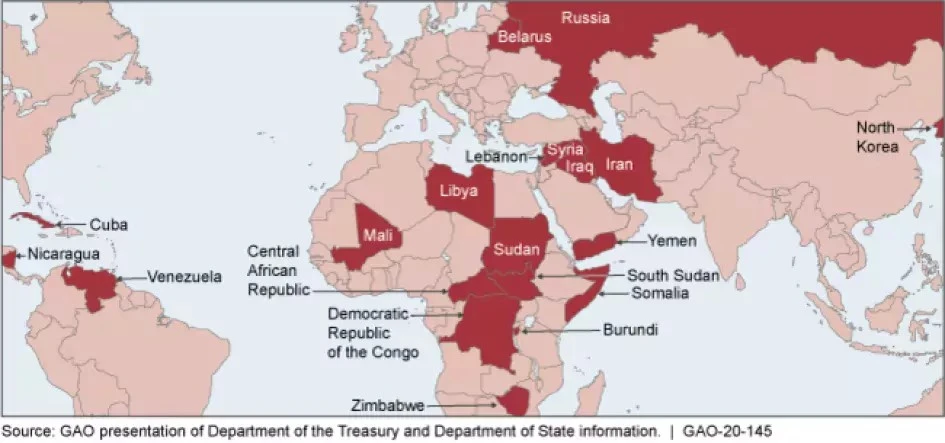
As of October 2023, several countries are prominently featured on the OFAC sanctions list:
- North Korea: Subject to extensive sanctions due to nuclear proliferation and human rights violations.
- Iran: Sanctions primarily target its oil exports and financial sectors, driven by concerns over its nuclear program.
- Russia: Sanctions have been imposed in response to its annexation of Crimea and actions in Ukraine.
- Venezuela: Economic sanctions aim to pressure the current government regarding its democratic processes and human rights issues.
Impact of Sanctions
The imposition of economic sanctions can have profound effects on the targeted countries. Here are some of the notable impacts:
- Economic Effects: Sanctions usually lead to a significant decline in a country’s economy, affecting trade, investment, and currency stability. For example, Iran has faced immense economic pressure, leading to inflation and unemployment.
- Humanitarian Concerns: While sanctions are intended to pressure governments, they can have unintended consequences on the civilian population. Access to essential goods, including food and medicine, can become restricted, exacerbating humanitarian crises.
- International Relations: Sanctions can strain diplomatic relations not only between the U.S. and the targeted country but also with allies who may disagree with the measures. Countries that are in close proximity to sanctioned nations often find themselves navigating complicated diplomatic landscapes.
Legal and Compliance Aspects
For businesses, navigating the OFAC sanctions list is crucial for compliance. Companies are required to conduct thorough due diligence to avoid transactions with sanctioned individuals or countries. Failure to comply can result in severe penalties, including hefty fines and restrictions on doing business.
Future of Sanctions
As geopolitical dynamics evolve, so too does the OFAC sanctions list. New countries and individuals may be added based on emerging threats, while existing sanctions may be reevaluated. Continuous monitoring and analysis will be essential for understanding how sanctions impact global relations.
Conclusion
The OFAC sanctions list is a powerful tool in international diplomacy and U.S. foreign policy. While its intent is to safeguard U.S. interests and promote global security, the implications for the targeted nations and their populations are profound. As the international landscape continues to shift, the discussion around sanctions and their effectiveness will remain critical.
